
Can Strength Training Improve Lower Back Pain?

Updated: Oct 16, 2025

Have you ever been told that your lower back pain will go away if you lose weight? OR maybe you've been told your lower back pain is due to a weak core. The truth is that lower back pain is very complex, especially since its origins are not always known.
Low back pain is defined as localized pain below the last rib and above the gluteal muscles (Jacobs, 2018). It can be caused by trauma, but often the cause is nonspecific. The term “nonspecific low back pain” was coined in a 1966 study that found the source of chronic low back pain could not be identified in 79% of males and 89% females (Farley et. al, 2024). The results of this study have duplicated multiple times. Some of the contributing factors to lower back pain include:
· Age
· Sex
· Height
· Weight
· Smoking
· Vertebral abnormalities
· Postural dysfunction
· Ruptured vertebral discs
· Comorbidities such as diabetes and cardiovascular disease
· A history of cancer
· Rheumatoid arthritis
· Core weakness
So, can strength training improve lower back pain?
Yes, so long as the cause is not something that requires medical attention. Provided an individual is cleared for exercise and the cause is due to factors such as weight, postural dysfunction, chronic illness such as diabetes and rheumatoid arthritis, or core weakness, strength training can help alleviate pain. Even a physical therapist will often include strength training as part of their treatment of more severe lower back pain or rehabilitation post surgery.
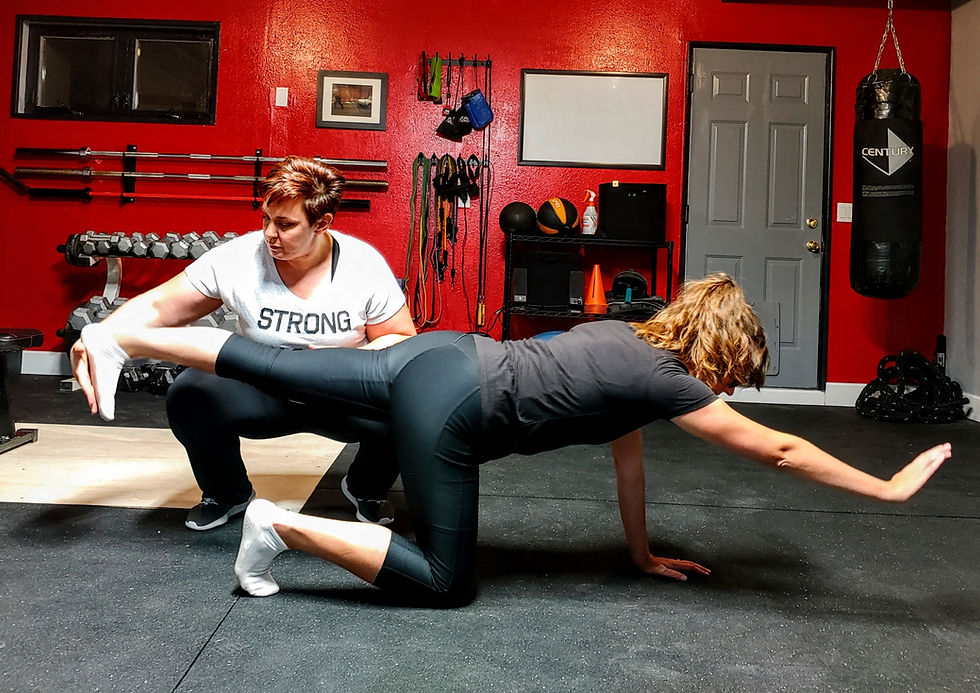
The key is to participate in an individualized program. Exercises should be included that maintain range of motion through the entire spine, teach maintenance of a neutral spine, and strengthen all core musculature, including those of the hips and back. (That's right, core doesn't just refer to the abdominals.) For example, for those whose back pain is likely due to a lack of strength, exercises such as birddogs or birddog pull-throughs are great to increase strength of the entire trunk while promoting a neutral spine. Press-ups (or lumbar extensions) are important to include for those whose back pain is related to ruptured vertebral discs as it relieves compression of the lumbar nerves. Above all, when lifting, an individual needs to understand how to brace their core and implement it through the entire set.
Remember, not only could the cause of lower back pain be several different things, but severity and recurrence are variable. As such, clearance from a medical professional should be obtained before testing and exercise participation begin.
References:
Bob & Brad. (2019, July 31). 7 simple core exercises that prevent low back pain [Video]. YouTube. https://www.youtube.com/watch?v=nA4YIzGykBI
Farley, T., Stokke, J., Goyal, K., & DeMicco, R. (2024). Chronic Low Back Pain: History, Symptoms, Pain Mechanisms, and Treatment. Life (2075-1729), 14(7), 812. https://doi-org.logan.idm.oclc.org/10.3390/life14070812
Jacobs, P. L. (ed.). (2018). NSCA’s essentials of training special populations. Human Kinetics.


Comments