
Why Rest Isn't Always Best


It's been a long-held belief that when we are injured we should rest to allow for our bodies to heal before exercising again. What many don't realize is that this rest is actually slowing healing time and could possibly lead to less than optimal results. Studies show that gentle movement and an intelligent, progressive training program can actually enhance healing, allowing the body to move and feel better.
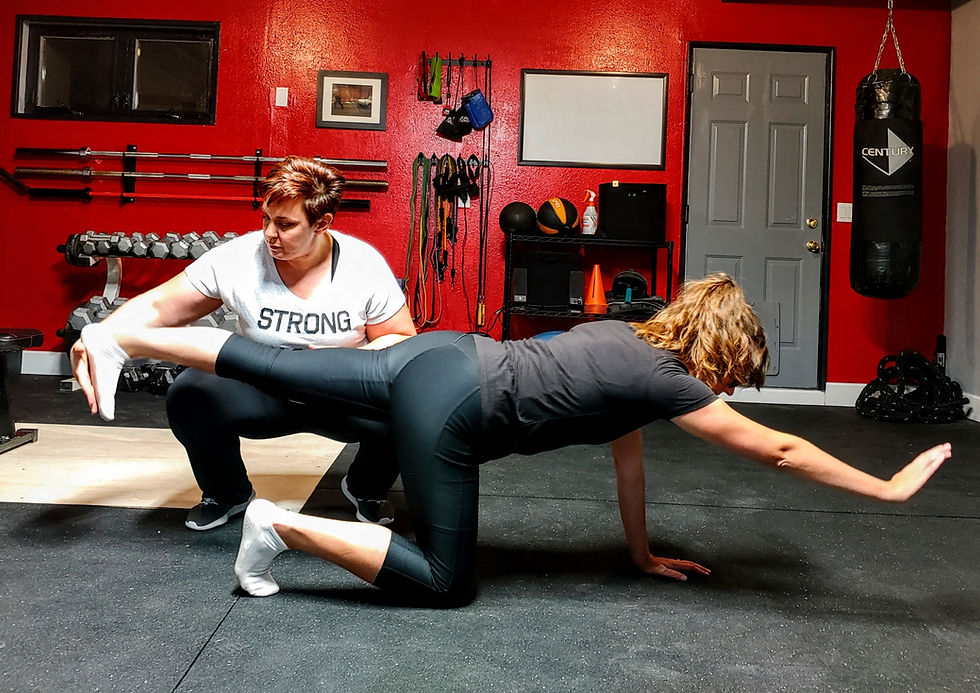
Now, I'm not talking your run-of-the-mill training program. There are rules that need to be followed when programming for an individual with pain or injury (including knowing when a physician or physical therapist needs to be seen). When these rules are followed, there are many ways in which exercise may improve our healing:
Improves circulation: Movement increases blood flow to injured areas, clearing out injured tissue and debris, while also bringing nutrients and cells to rebuild healthy tissue.
Prevents atrophy: The loss of muscle mass when we don't use an injured area actually increases instability of the joint. At the very least, this means more work to return to pre-injury strength following an injury. In some cases, it may lead to further injury if normal activity is resumed too quickly.
Helps to maintain strength: The less strength you lose as you are healing, the easier it is to return to normal activity once you're feeling better. Strong muscles also increase joint stability, helping you move more easily without pain.
Increases muscle strength and tendon stiffness: Sometimes muscle weakness may be contributing to our pain. In these cases, a strength program following well-researched methods can actually lead to pain-free movement.
Improves mental health: Did you know that depression can actually magnify our pain? Yep! When we feel worse emotionally, we often feel worse physically, making it harder to recover. Ceasing all exercise when we're injured could lead to a decline in mental health that will make it harder to return to normal activity.
Improves cognition: Exercise has been shown to improve mental clarity, which helps us to make good decisions during recovery - a necessary ability to prevent reinjury.
I could go on and on about the benefits of exercise in relation to pain and injury. If you are interested in learning more (and like super scientific reading), I found a great article on the molecular mechanisms of exercise that contribute to tissue regeneration. This article covers how exercise affects several of the body's systems and how it can improve healing in many different conditions. You can access the article here.
If you would like to see how a strength program can help you move better, hurt less and live stronger, click below to schedule your free 30-minute consultation.
Reference:
Chen, J., Zhou, R., Feng, Y. et al. Molecular mechanisms of exercise contributing to tissue regeneration. Sig Transduct Target Ther 7, 383 (2022). https://doi.org/10.1038/s41392-022-01233-2


Comments